Summer Survival: No-Heat Batch Prep for Hot Days
How can I batch prepare meals without heating up the house in summer?
On this page
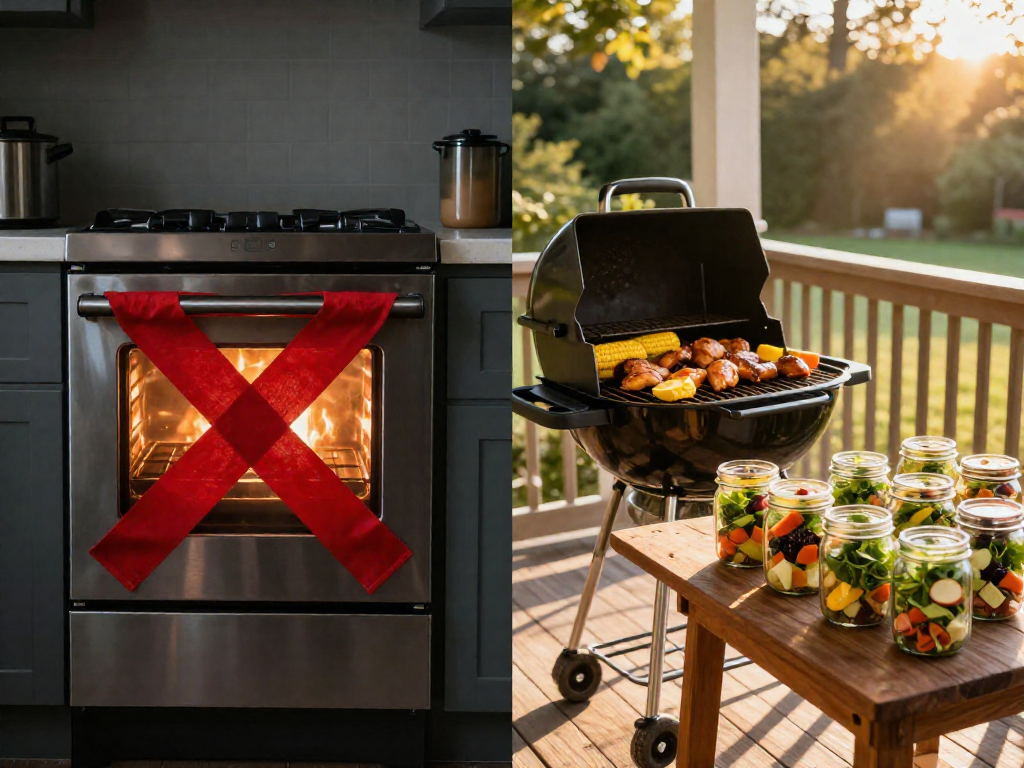
When summer hits, the thought of turning on the oven feels like a punishment. But you still need to get meals on the table—without relying on takeout every night. This guide shows you how to batch prep a week’s worth of meals using outdoor cooking and no-heat assembly, so you can keep the house cool and your evenings free.
The Core Strategy: Shift Cooking Outdoors & Embrace No-Heat Assembly
To batch-prep without turning your kitchen into a sauna, you need a system that moves the heat outside and builds meals around cool assembly — not a winter routine in July. The old model of roasting sheet pans and simmering big pots on the stove backfires as soon as temperatures climb, blasting your AC and leaving you with heavy, stewy dishes nobody wants. Instead, lock in three pillars: outdoor cooking, no‑cook assembly, and appliance relocation. Together they create a repeatable weekly template that keeps your kitchen cool and your food fresh.
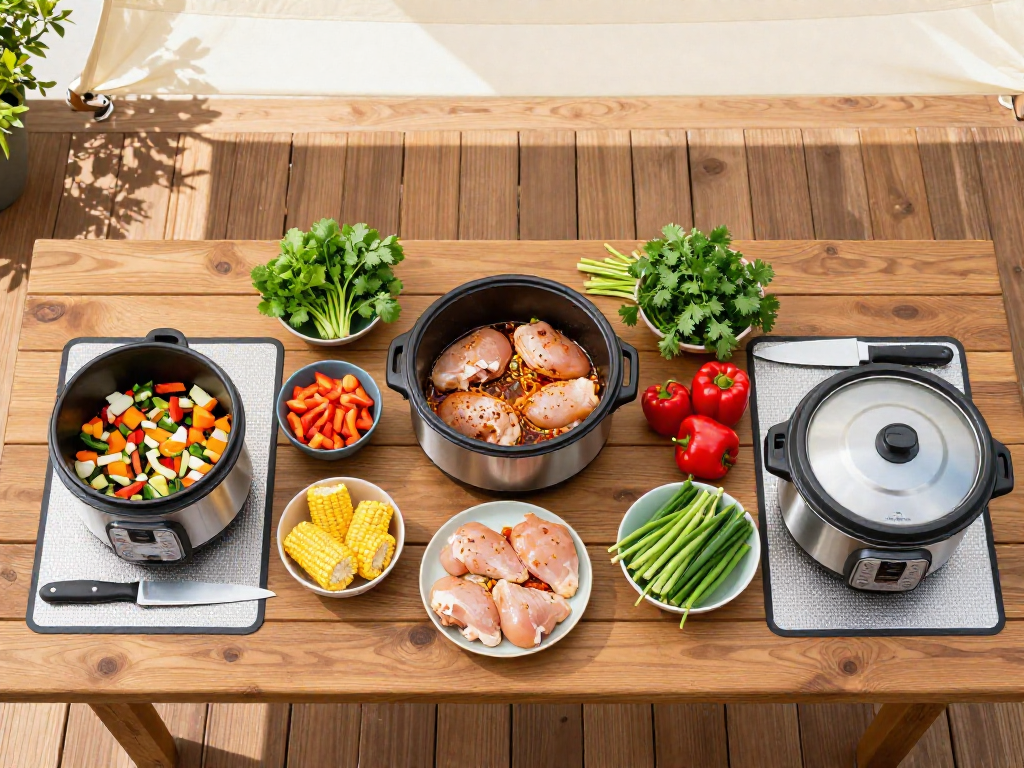
Outdoor cooking is your grill day — one session where you load the grates with proteins, char vegetables, and cook larger batches of grains or flatbreads over direct heat. Everything tastes better with a little smoke, and cleanup stays outside. Appliance relocation gives you an extra power day: plug in a slow cooker, induction burner, or electric griddle on a porch or covered balcony. Use it to make big-batch staples like soups, beans, or hard‑cooked eggs without ever touching your indoor stovetop. No‑cook assembly fills the rest of the week. You line up jars of mason‑jar salads, grain bowls, rice‑paper wraps, and cold noodle boxes — all built from prepped components that just get tossed, layered, and rolled.
The weekly template is simple. Pick one grill day (Sunday afternoon works) and one outdoor‑appliance day (maybe Wednesday evening) for anything that needs heat. The other days are assembly lines: rinse, chop, and spin greens, then stack containers with bases like quinoa or couscous, add proteins from the grill, and finish with dressings, crunchy toppings, and fresh herbs. You’re not cooking; you’re constructing. The biggest mistake is treating these moves as a random list of tips — ignoring that summer demands its own repeatable system, not a one‑off “cold meal” Pinterest board. Set your template and run it every week, the same way you ran your winter batch day. That’s how you eat well and stay cool all season long.
Grill Batch Prep: Cook Once, Eat All Week
Your grill is air conditioning's best friend. While it keeps the kitchen cool, it can also churn out a week's worth of protein and vegetables in one session. No side burner or oven required.
Start with a meal template: pick two to three proteins and an equal number of grill-friendly vegetables, then scale up to cover three to four days. Think chicken breasts, flank steak, and shrimp for protein, plus zucchini, bell peppers, and corn on the cob for vegetables. Everything gets a quick marinade that doubles as a serving sauce — a simple ratio of oil, acid (lemon juice or red wine vinegar), and aromatics (garlic, herbs, a pinch of salt) works across all three proteins without tasting the same.
Grill everything in one go. Proteins hit direct heat first for a good sear, then finish over indirect heat to avoid drying out. Vegetables just need a fast char; leave them with some bite so they hold up through the week. The biggest mistake here is under-grilling because you're only thinking about tonight's dinner. You need enough food for multiple assemblies, so don't skimp on volume.
Once the food cools, portion it into clear containers and label them — nothing fancy, just a strip of masking tape with the protein and the day you grilled it. Stack them in the fridge where you can see them. When it's time to eat, pull from the stash: toss shrimp and peppers over couscous, slice steak onto a bagged salad, or cube chicken for a cold wrap with roasted corn and a drizzle of that reserved marinade. One hot afternoon, a week of no-heat meals.
No-Cook Assembly-Line Salad Jars & Grain Bowls
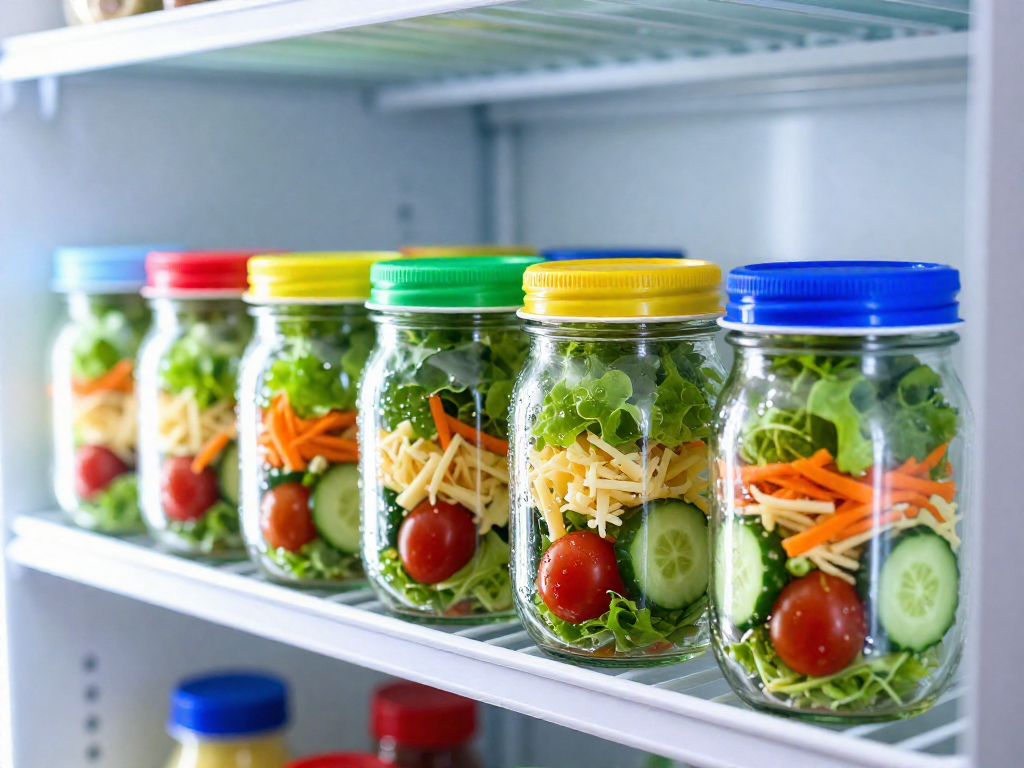
Mason jar salads and grain bowls are the backbone of no-heat batch prep. The trick is layering: dressing first, then hearty vegetables, proteins, grains, and finally delicate greens on top. When it’s time to eat, just shake the jar and dump it into a bowl. Nothing gets soggy because the greens never touch moisture until that moment.
For grain bowls, cook a big pot of something quick like quinoa or farro early in the morning while the house is still cool, or take your rice cooker outside. That one batch becomes the base for four or five lunches. Then set up an assembly line: line up your jars or containers, start with the dressing, then layer in the same order across all of them. You'll fill a week's worth in under 20 minutes.
The one thing that kills this system is flavor fatigue. If every jar tastes the same by Wednesday, you'll abandon the plan. Instead, build a simple mix-and-match chart: choose one dressing (lemon-tahini, miso-ginger, balsamic), one protein (canned chickpeas, smoked tofu, hard-boiled eggs), a crunchy vegetable (bell pepper, cucumber, shredded carrot), and a fresh herb (cilantro, mint, basil). Rotate the combinations each week. Write the chart on a sticky note and stick it to the fridge so anyone in the family can grab and go without asking what’s inside.
This is a repeatable template, not a recipe. Once you have the order of operations down, you can riff endlessly and never turn on the oven.
Outdoor Slow Cooker & Instant Pot Hacks
When the temperature spikes, shift your electric workhorses outside. Set a slow cooker or Instant Pot on a sturdy table on the patio, plug into a heavy‑duty outdoor‑rated cord, and you can batch‑cook pulled pork, beans, or broth without adding a single degree to the kitchen. An Instant Pot becomes a hands‑off rice cooker or protein steamer right next to the grill—and you get the unexpected win of freeing up precious indoor counter space during the week’s biggest prep session.
Freezer-Friendly Smoothie Packs & Cold Snacks
Smoothie packs are a no-brainer: portion frozen fruit, a handful of spinach, and a scoop of protein powder into quart bags, then stash them in the freezer. When you need a quick cool-down, dump a pack in the blender with liquid and you’re done. Turn leftover smoothie mix or yogurt into popsicles by pouring into molds and freezing—kids love them. For grab-and-go cold snacks, roll up a batch of no-bake energy balls (oats, nut butter, honey, add-ins) or prep a few jars of overnight oats with chia and fruit. These take minutes to assemble and keep your kitchen cool all week.
The 10-Minute Evening Reset
Spend ten minutes clearing and wiping the grill, starting a batch of cold brew, and restocking the fridge with tomorrow’s grab-and-go containers—that tiny nightly routine is what makes no-heat days run on autopilot.
FAQ
Can I really batch cook without any indoor heat?
Yes, you can batch cook without any indoor heat. Focus on no-cook meals like grain bowls, salads, and chilled soups, or do all your grilling in a single outdoor session to stock the fridge with cooked components for the week.
What if it’s too hot outside to grill comfortably?
If it’s too hot to grill outdoors, pivot to completely no-cook meals using canned beans, pre-cooked grains, and fresh vegetables, or move a slow cooker to a porch or garage so it doesn’t warm your kitchen. Schedule prep for early morning when temperatures are lower.
How do I keep no-cook meals interesting for a whole week?
Keep no-cook meals interesting by rotating flavor bases and textures. Use a weekly template: assign each day a different cuisine profile, like Mediterranean bowls with olives and feta, then Asian-inspired wraps with peanut sauce, and vary crunchy toppings from nuts to seeds to keep it fresh.
Can I use the same system if I don’t have a grill?
Yes, the system works without a grill. Lean on no-cook assembly, cold-prep components, and small appliances like a rice cooker that won’t overheat the kitchen. You can also use a portable burner outside to cook grains or proteins in bulk.
See also
- Batch Cooking for Beginners: A 5-Step System
- Winter Batch Prep: Slow Cooker & Instant Pot Templates
- One-Hour Weekend Prep for the Whole Workweek
Related articles
Winter Warmer: Batch-Cooking Soups and Stews for a Month
How do I batch cook and freeze a variety of soups and stews for winter?
Jul 31, 2026 · 7 min read
Seasonal Chore Batching: Spring Cleaning and Fall Yard Work Templates
How can I apply batching techniques to deep seasonal chores?
Jul 31, 2026 · 8 min read
The Emergency Meal Stash: A Seasonal 'Oh Crap' Kit for Busy Weeks
How do I create a stash of emergency meals for inevitable hectic times?
Jul 31, 2026 · 5 min read