The Pantry Power Hour: A Monthly Bulk Prep Session
How can I do a monthly deep pantry prep to support weekly meals?
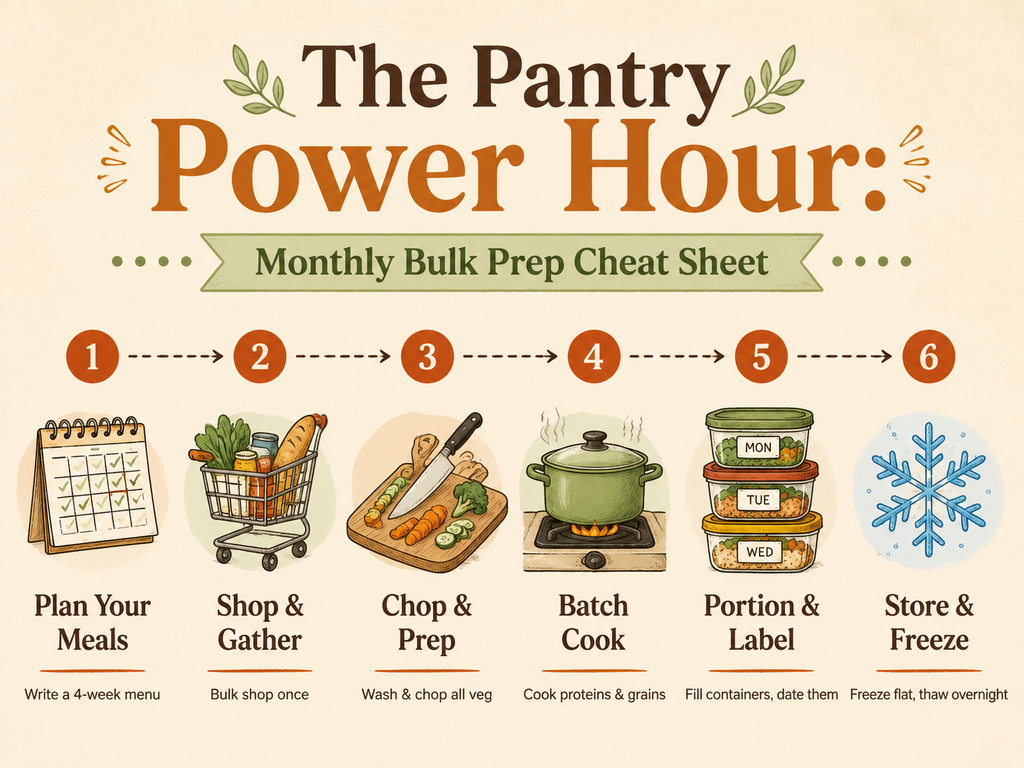
On this page
Busy weeknights with hungry kids and zero dinner plan—sound familiar? Instead of scrambling nightly, imagine opening a pantry and freezer stocked with ready-to-go building blocks. A dedicated monthly ‘power hour’ creates that reality, setting your family up for weeks of effortless meals.
What Exactly Is a Pantry Power Hour?
A Pantry Power Hour is a once-a-month session where you batch-prep a set of versatile meal building blocks—think cooked grains, seasoned beans, roasted vegetables, sauces, and marinades. Instead of full weekly meals, you stock your freezer and pantry with components that snap together into endless quick dinners. Where weekly meal prep fronts the entire meal, this method gives you flexible, mix-and-match ingredients that slash everyday cooking to 15 minutes or less.
Plan on two to three hours, start to finish. You might tackle one focused afternoon, or split it across two shorter blocks if that fits your month better. The goal is a deep pantry ready to support every busy weeknight, not just one week of identical containers. This rhythm fits the dual-income cadence—more upfront, less daily chaos.
The 30-Minute Planning Ritual Before You Shop
This half-hour ritual is the secret to a smooth Power Hour—skip it, and you’ll waste time and money grabbing things you already have. Start with a fast inventory: open the pantry, fridge, and freezer. Note what’s plentiful, what’s nearly gone, and any stragglers that need using up. Don’t overcomplicate it—a quick mental sweep or a phone note is enough.
Next, scan the family calendar for the upcoming month. Spot the late meetings, weekend trips, and sports nights. A week with three evening commitments calls for dump-and-go meals, not a finicky new recipe. Adjust your component list accordingly: maybe double the batch of slow-cooker taco meat that week, or skip the roasted veg that no one will have time to reheat.
Now decide on 5–7 core components you’ll prep. These should be your household’s greatest hits—the proteins, sauces, and sides you eat constantly. Think seasoned ground beef or turkey, a big batch of marinara, roasted broccoli or sweet potatoes, cooked grains, a vinaigrette, and maybe a sheet-pan protein. Stick with what you know you’ll use to avoid freezer orphan containers.
Finally, write a shopping list grouped by store section. List all the produce together, then pantry, dairy, and proteins. This cuts shopping time in half and prevents backtracking. A categorized list also makes it easy to see if you can grab something at a bulk store or need a specialty trip—no more wandering aisles guessing.
The Building Blocks: What to Actually Make in Your Power Hour
Your power hour works because it churns out a set of versatile, ready-to-go components that collapse the distance between “I’m too tired to cook” and “dinner’s on the table.” Think of them in five categories, each with a method that makes freezer and fridge real estate work harder.
Sauces and bases are weeknight cheat codes. Make a giant pot of marinara, a blender full of pesto, a batch of Thai-style curry paste, or a double recipe of red enchilada sauce. Cool them fully, then pour into quart-sized zip-top bags, press flat, and freeze. Flat-frozen slabs thaw in a bowl of warm water in minutes, and they stack like books in the freezer. Label with tape and a permanent marker — names and dates mean you’ll actually grab them three weeks later.
Grains and legumes turn into side dishes and bowl foundations. Cook a big batch of brown rice, quinoa, or French green lentils — using broth instead of water boosts flavor without extra effort. Spread them on a sheet pan to cool fast (no mush), then portion into freezer bags and flatten. A frozen shingle of cooked lentils breaks into shards for salads; a block of rice reheats with a splash of water in a skillet. If you prefer canned beans, that’s fine — but cooking dried beans from scratch and freezing them in their cooking liquid yields creamier texture and costs less.
Proteins anchor meals without monopolizing your weeknight time. Marinate chicken thighs or flank steak in zip-top bags and freeze them raw; the marinade soaks in as they defrost. Brown a few pounds of ground beef with onions and freeze in meal-sized crumbles, ready to dump into tacos or pasta sauce. For plant-based nights, press and bake tofu slices until chewy, then freeze on a tray before bagging — they stay separate and reheat with a crisp edge.
Vegetables are where a little upfront knife work pays off for weeks. A food processor chops pounds of onions in seconds; freeze them in one-cup pucks (or flat bags) for soups, sautés, and casseroles. Roasted sweet potato wedges and blanched broccoli florets freeze beautifully on a sheet tray, then get bagged. The broccoli needs a quick shock in ice water to hold its color and snap, but once frozen, it’s a drizzle of olive oil and a hot oven away from a side dish.
Breakfast boosters keep chaotic mornings calm. Assemble overnight oats jars with rolled oats, chia seeds, and a pinch of salt; store them dry, then just add milk and a spoonful of jam the night before. Smoothie packs are even simpler: toss spinach, banana chunks, and berries into bags and freeze. In the morning, dump a bag into the blender with yogurt and liquid — no measuring, no peeling, no excuses.
By filling your freezer with these building blocks, every dinner becomes a quick assembly job rather than a starting-from-scratch project.
The Workflow: How to Execute a Power Hour Like a Pro
Your Pantry Power Hour isn't a relaxed cooking session—it's a tightly orchestrated sprint, and the secret to pulling it off without chaos is treating your kitchen like a production line. Before you even turn on the oven, carve out clear stations: a chopping zone with a large cutting board and knife, a cooking zone at the stove and countertop appliances, a cooling area with sheet pans and wire racks, and a packaging station with containers, labels, and a marker. Having everything in its own place means you won't be hunting for a ladle while your beans boil over.
Minutes 0–20: The Setup Blitz Pull every ingredient from the fridge and pantry, group them by recipe, and set out your tools. Fill the kettle or a pot with water now—you'll need boiling water soon. This is when you cross-check your plan against reality: if the sweet potatoes look too small, roast a few extra; if you’re short on a spice, swap it out before you're mid-recipe. Don't skip preheating the oven to 400°F right at the start, because roasting is the workhorse of your hour.
Minutes 20–60: The Cooking Cascade Hit the longest-cooking items first. Get your grains going: a pot of brown rice or farro takes 30–40 minutes, while quinoa or white rice are closer to 20. Toss chopped root vegetables—carrots, beets, parsnips—with oil and salt, spread them on sheet pans, and slide them into the hot oven. They’ll need 30–40 minutes, giving you a window for other tasks. Now is the moment for multitasking at scale. Plug in your Instant Pot for a batch of chickpeas or black beans: a 35-minute high-pressure cycle (with natural release) will give you perfectly cooked legumes without any stirring. While the oven and pressure cooker hum, commandeer your stovetop. Start a simple tomato sauce in a wide sauté pan—onions, garlic, canned tomatoes, herbs—and let it simmer on low for 20 minutes, deepening in flavor as you work. With all those heat sources running, batch your prep like an assembly line. Chop every onion you’ll need for the whole month at once, then divide them among the sauce, a grain bowl, and a future soup base. Mince a head of garlic in one go; use what you need now, and stash the rest in a jar under oil in the fridge. If you're roasting bell peppers or eggplants, push them to the back of the oven where it’s hottest, and keep an eye on them in the last 15 minutes.
Minutes 60–90: The Cooling & Packaging Sprint As timers beep, shift your focus to cooling and packing. Slide roasted veg onto a cooling rack—they steam and get soggy if you stack them hot. Spread cooked grains on a sheet pan to cool quickly. While things cool, clean as you go: load the dishwasher, wipe down counters, and put away ingredients. A tidy kitchen at the end is part of the system, not an afterthought. Once food is cool enough to handle, portion it into your containers. Label everything with the contents and date—yes, you’ll remember now, but three weeks later you’ll be grateful for the note. Stack containers in the fridge or freezer in the order you’ll use them: that week’s grains and proteins at the front, deep-pantry backups toward the back.
This timeline isn’t rigid—if your beans need an extra 10 minutes, stretch the packaging phase. But the structure keeps you from drifting into single-tasking. In 90 minutes you’ve built a pantry arsenal without a sink full of dirty dishes, and you walk away with the clean, satisfied feeling of a job well done.
The Storage System That Keeps Everything Fresh and Findable
The best pantry power hour falls apart without a storage setup that keeps everything visible and usable. Skip the random mismatched containers and build a simple, repeatable system. Stackable deli containers in uniform sizes are your workhorses—cheap, reusable, and they nest perfectly in the fridge or freezer. For batch-cooked soups, sauces, or stews, Souper Cubes let you freeze perfectly portioned bricks that pop out and store flat in a zip-top bag. And a vacuum sealer is a quiet game-changer for meat, cooked grains, or anything you want to protect from freezer burn over a month.
Labeling is the non-negotiable step that separates order from mystery. A fat permanent marker and strips of masking tape do the job. Write the dish name, the date, and a tiny reheating shorthand—something like “Thaw overnight, microwave 2 min” or “Reheat in oven at 350°F for 20 min.” That one line saves future-you from defrosting something you can’t identify and then guessing how to bring it back to life.
Freeze flat whenever you can. Fill zip-top bags partway, press out the air, and lay them on a sheet pan in the freezer until solid. Once frozen, you can stack them vertically like books. This takes a fraction of the space puffy bags do and thaws in half the time because the thin profile warms evenly. Inside the freezer, religiously practice first-in-first-out: newest items go behind the older ones, so you’re always reaching for what should be used first.
In the fridge, clear plastic bins give you at-a-glance control. Dedicate one bin to prepped veg (washed greens, diced peppers, sliced carrots), another to cooked proteins, and maybe a small condiment caddy for your house sauces and dressings. When everything has a home and nothing is buried, that midweek dinner comes together almost on autopilot.
From Power Hour to Plate: Assembling Weekly Meals
The real magic of a Power Hour lies in how quickly dinner comes together when you’ve already done the heavy lifting. Each night, you’re essentially running a tiny assembly line: pick one protein, one grain, one vegetable, and one sauce from your stash. That foundation turns decision fatigue into a 10-minute finish.
A sample week might look like this: Monday, shredded chicken tossed with pesto, quinoa, and roasted peppers. Tuesday, seasoned ground beef warmed with black beans, tucked into tortillas, and topped with pre-chopped lettuce and salsa. Wednesday, a quick stir-fry of pre-cooked pork strips, frozen stir-fry veg, and a garlic-soy sauce over brown rice. Thursday, chickpeas sautéed with cumin, served over couscous with roasted carrots and a lemon-tahini drizzle. Friday, a “kitchen sink” pasta: toss Italian sausage crumbles, marinara from the freezer, and a handful of spinach with penne. You’re not cooking from scratch—you’re curating from a well-stocked inventory.
The ten-minute meal becomes the norm when components are ready. Grain bowls: base of quinoa or farro, add any protein, a pile of roasted vegetables, a spoonful of pickled onions, and a dollop of yogurt sauce. Stir-fries: protein + veg + sauce in a hot skillet, served over rice that’s reheated in minutes. Hearty salads: shredded meat, canned beans, crumbled cheese, and a robust vinaigrette on pre-washed greens. The key is keeping sauces varied—one creamy, one tangy, one spicy—so the same chicken and broccoli feel brand-new three different ways.
When the fridge looks sparse toward week’s end, the “fridge forage” meal is your secret weapon. Pull out all containers: a half-cup of salsa, a scoop of black beans, leftover roasted sweet potatoes, a few tortillas. Stack, heat, and top with a fried egg for a fast dinner that uses every scrap. Or toss all odds and ends—grain, veg, protein—into a skillet, add a splash of broth, and call it a hotchpotch hash. The system works because you’ve built interchangeable pieces; even a chaotic pile becomes a coherent meal. This is the payoff of the Power Hour: not just saved time, but a nightly rhythm that feels effortless and abundant.
Pitfalls That Derail a Pantry Power Hour (and How to Dodge Them)
When you’re carving out an hour, it’s tempting to plan a prep list as long as your grocery receipt. Don’t. Overambition is the fastest route to burnout. Pick five to seven core components max—enough variety to mix and match, but not so many that you’re still cleaning up three hours later. Equally, watch for taste fatigue. That same teriyaki sauce genius in week one becomes a groan by week three. Rotate at least two flavor bases each month to keep things interesting.
Skipping a five-minute inventory check before you shop almost guarantees you’ll end up with three bags of lentils and no tomato paste. Glance at the pantry and freezer, note what you actually use, then build the list. And for the love of a clear fridge, label everything with the date and contents. Mystery containers breed waste and irritation. Finally, make the power hour a non-negotiable calendar event—same Saturday morning, same duration. Without a recurring slot, it’ll always get squeezed out by a weekend chore you like less.
Adapting Your Power Hour for Seasons and Life Changes
Your monthly power hour isn’t set in stone—tweak it to match the season’s rhythm. As fall hits and holidays loom, shift your session toward make-ahead sides and freezer-friendly pie fillings. Pre-portion cookie dough logs so you can slice and bake at a moment’s notice. When back-to-school chaos arrives, your power hour saves mornings: bake a double batch of muffins, chop fruit into grab-and-go containers, and pack veggie sticks. Summer calls for a different focus: marinate chicken thighs or flank steak, and assemble salad jars that stay crisp all week. And when life is just too much, don’t abandon the habit—scale down to a pantry half-hour. Pick one high-yield category, like snacks or proteins, and knock it out. A tiny burst of batching is still a win.
See also
- Weekly Meal Prep: The Sunday Reset
- Freezer Cooking 101 for Busy Families
- The Chore System That Keeps Our Kitchen Running
- Back-to-School Lunch Prep: A Mom's Guide
Related articles
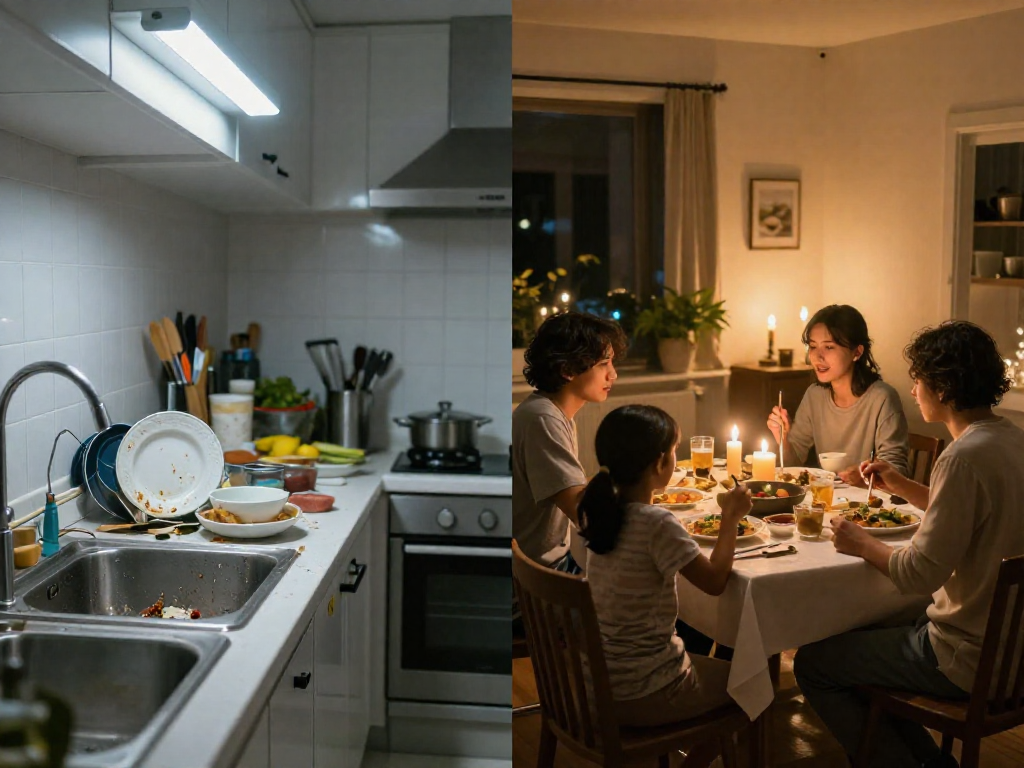
From Chaos to Calm: How Meal Prep Transformed Our Evenings
Discover the emotional and practical impact of consistent meal prep on family life—less stress, more connection, and calm evenings.
Jul 31, 2026 · 5 min read
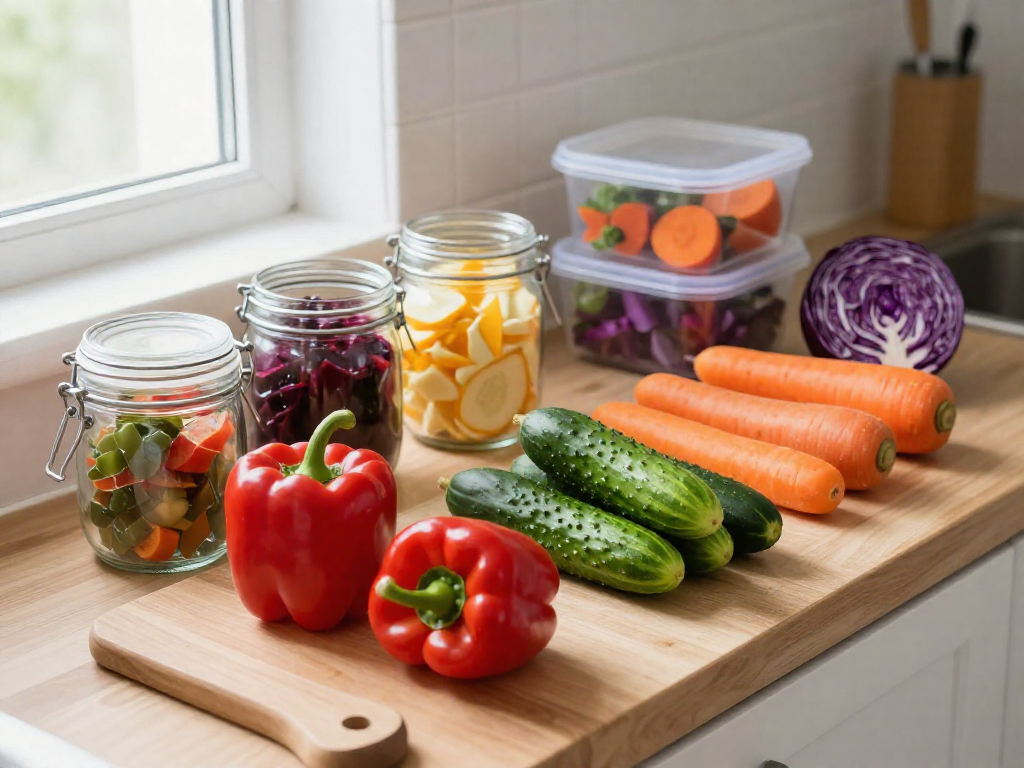
The No-Cook Weekend: How to Prep Without Turning on the Oven
How can I meal prep in summer or without heating up the kitchen?
Jul 31, 2026 · 7 min read
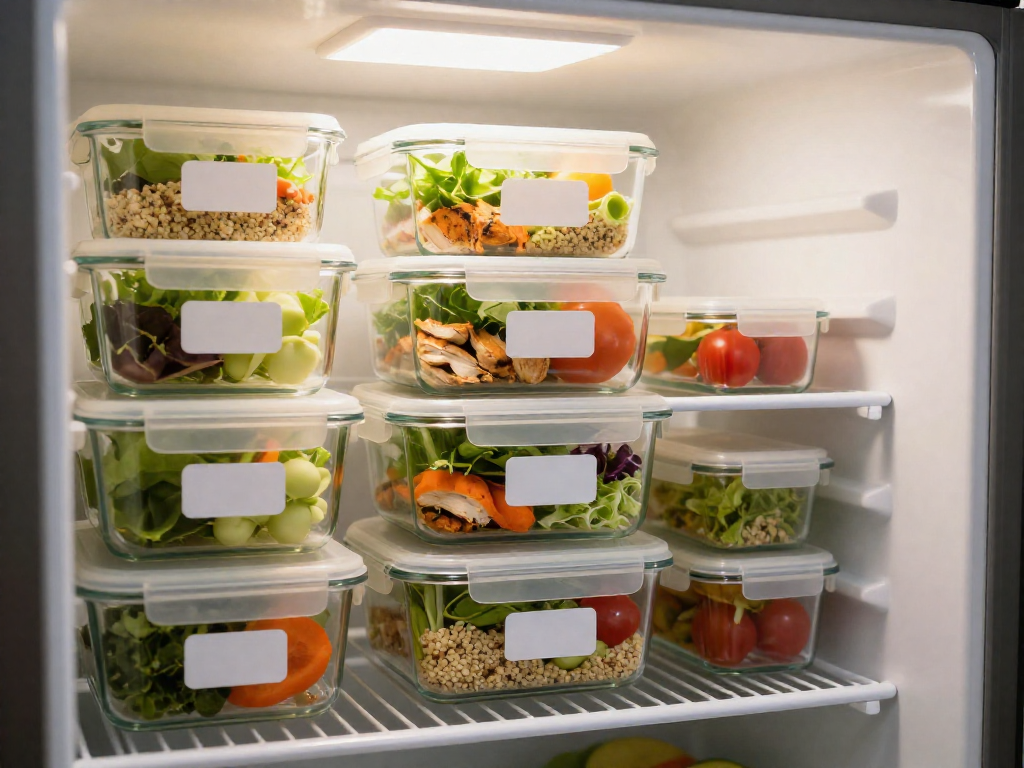
Meal Prep Containers: A Complete Guide for Dual-Income Families
What are the best containers for family meal prep, considering portions, storage, and reheating?
Jul 31, 2026 · 8 min read