The Sunday Session: A Step-by-Step Dual-Income Meal Prep Routine
How do I set up a sustainable Sunday meal prep routine for a busy family?
On this page

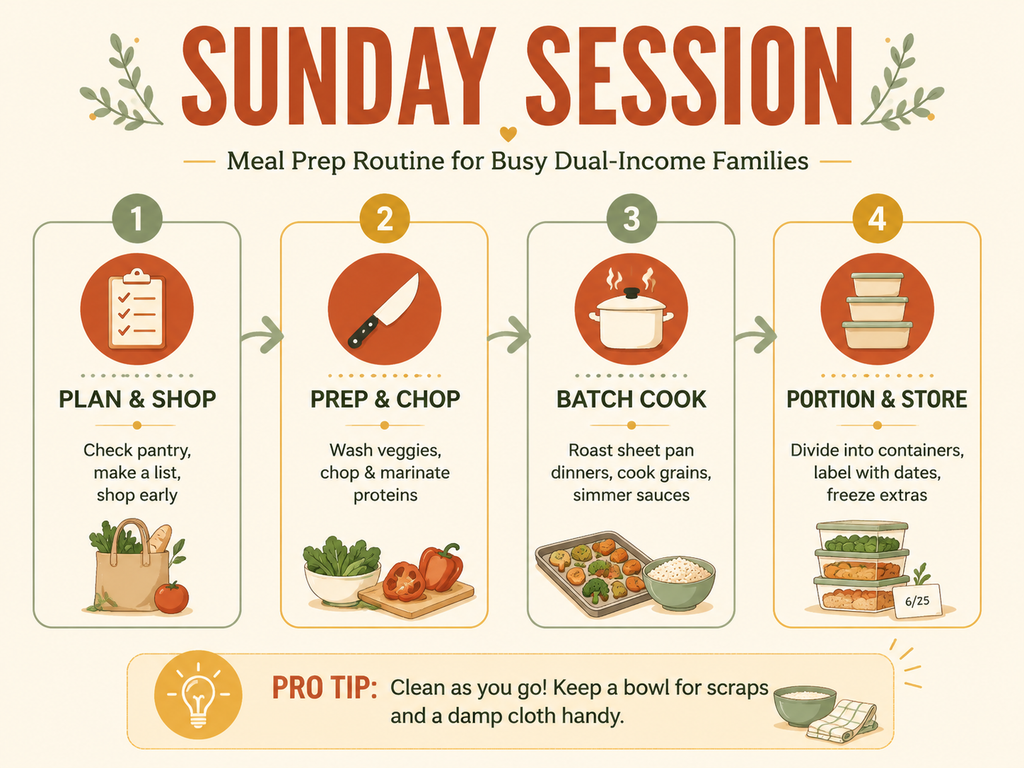
For dual-income families, Sundays are the linchpin of the week's sanity. But too often, meal prep becomes a marathon of chaos that leaves the kitchen trashed and the cook resentful. This guide outlines a repeatable Sunday Session system that divides labor, follows a tight timeline, and ends with a clean kitchen—so you can actually enjoy your evening.
The Pre-Game: Saturday Planning & Shopping
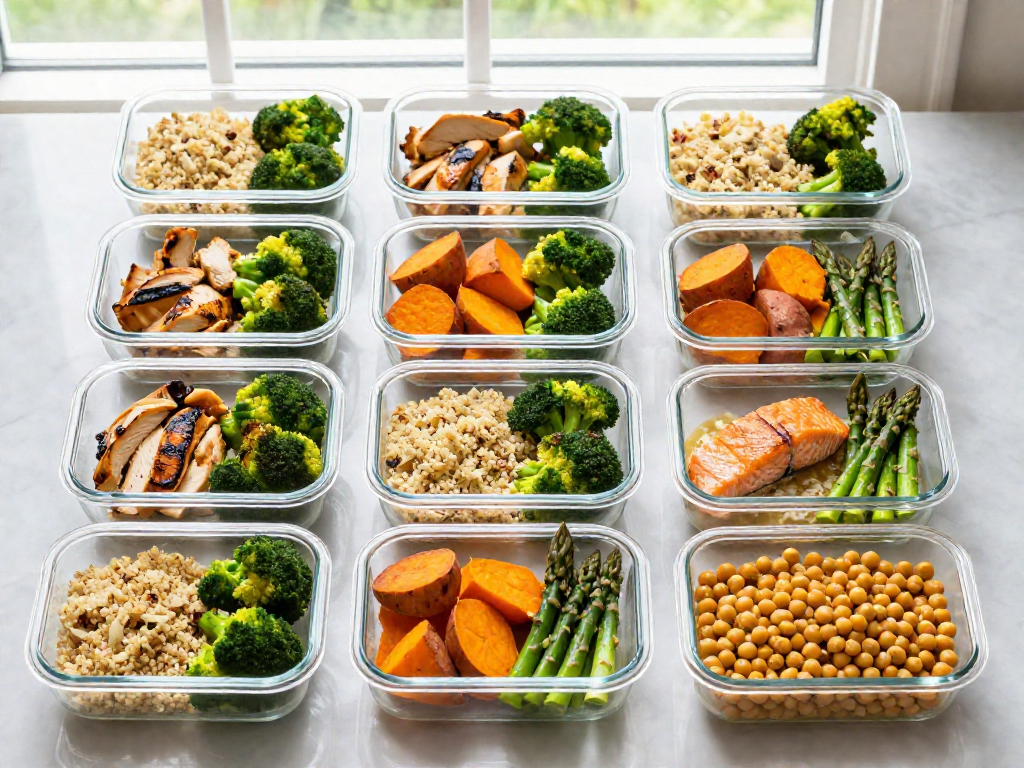
A sustainable Sunday meal prep routine doesn’t start on Sunday — it starts with a deliberate Saturday planning session that takes under 30 minutes. That half-hour investment saves you from the Sunday scramble and the weeknight “what’s for dinner?” panic.
Start by taking stock of what’s already in your fridge and pantry. This quick inventory prevents duplicate purchases and forces you to use up odds and ends before they spoil. For a dual-income household, skipping this step often means an overstuffed fridge and wasted cash.
Next, lock down your core building blocks. Pick three or four proteins and two or three grains for the week. This narrows decisions without feeling restrictive. Think sheet-pan chicken thighs, a batch of ground beef for taco bowls, and maybe a slab of salmon. Grains might be brown rice, quinoa, and farro. With those anchors chosen, weeknight meals become mix-and-match assemblies rather than separate recipes — a system that feels flexible even on busy evenings.
Now turn your confirmed picks into a shopping list — and split it. One partner hits the bulk or warehouse run (Costco, Sam’s Club) for proteins, grains, and household staples. The other does the perimeter grocery shop for fresh produce, dairy, and any specialty items. Dividing the list in this way turns a single exhausting trip into two focused stops, each under 45 minutes. You’ll avoid the aisles you don’t need and keep impulse buys in check.
Schedule this 30-minute planning block together on Saturday morning or right after breakfast. Sit down with coffee, your shared calendar, and that week’s commitments. Agree on which nights need fast 15-minute plates and which can handle a slower meal. This touchpoint aligns your logistics and prevents the midweek “I thought you were handling dinner” friction.
Finally, keep a running note on your phone for pantry gaps you spot during the week — olive oil running low, a favorite spice emptying. Those get rolled into the Saturday session so nothing gets forgotten. This Saturday pre-game transforms Sunday meal prep from a chaotic solo marathon into a calm, assembly-line flow. And it all starts with a single half-hour you block together.
Divide and Conquer: The Dual-Income Role Assignment
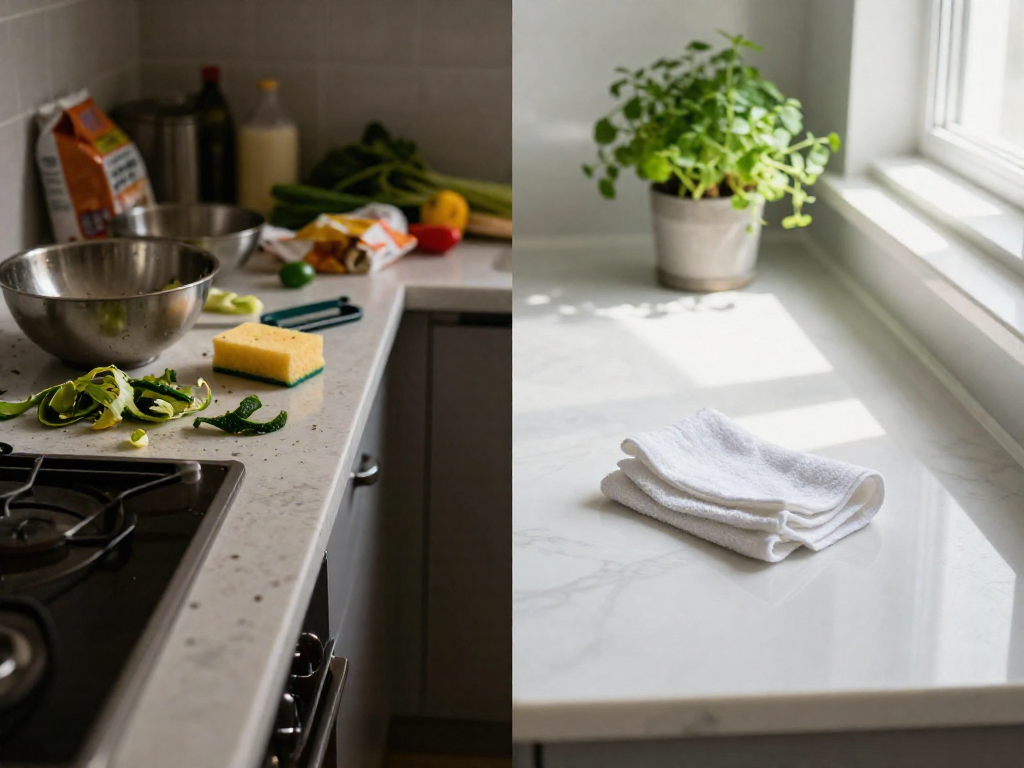
Resentment builds in the kitchen when one person silently shoulders the mental and physical load of meal prep while the other scrolls their phone or wrangles the kids. The fix is explicit, alternating roles that turn a solo slog into a team sport. Before you so much as preheat the oven, designate two roles—Chef and Sous-Chef—and know that next week you’ll swap. This isn’t about keeping score; it’s about building a system that works even when you’re both running on fumes.
The Chef owns the stovetop and oven. They season by taste, juggle timers, and make the final call on whether the chicken needs another five minutes. This person doesn’t chop onions or wash lettuce; their job is to keep the cooking moving so everything lands hot at the same time. If a recipe needs on-the-fly adjustments—adding broth, dialing back spice—the Chef handles it. They’re the conductor, not the entire orchestra.
The Sous-Chef is the engine behind the scenes. They read the recipes ahead of the Chef’s pace, pulling out tools, measuring spices, and having chopped veg ready before the pan needs it. As soon as a cutting board or mixing bowl is spent, they rinse it or load the dishwasher. The goal: the Chef never pauses to hunt for a garlic press, and the sink never piles up into a post-cook nightmare. This role is half prep, half continuous cleanup, and it’s what makes a three-hour marathon feel like a breezy 90-minute session.
Kids belong in the rotation, too. Tiny hands can wash produce, tear herbs, set out storage containers, or even stir room-temperature ingredients. Give them a specific, non-negotiable task—filling the sous vide bin, wiping down the counter—and expect messes as the price of raising competent eaters. These small contributions save you real time and, just as important, stop meal prep from being something that happens to the family while they watch.
Here’s where most couples stall: they assume the kitchen-savvy partner should always be Chef. Resist that. Swapping roles every single week does two things. First, it prevents burnout and the subtle message that one person’s time is less valuable. Second, it cross-trains both of you so neither is helpless when the other is sick, working late, or just over it. The partner who “can’t cook” learns by starting as Sous-Chef—watching how you brown meat, asking why you salt at certain moments—then steps into the Chef role with growing confidence. By month three, you’ll each have a roster of go-to meals you can execute solo.
When to swap? Lock it to the calendar. Every Sunday, before you open the fridge, say out loud: “I’m Chef this week, you’re Sous.” Write it on a whiteboard if you have to. That tiny ritual defuses the invisible negotiation that drains energy before you’ve started. Over time, the roles become muscle memory, and the kitchen shifts from a source of tension to a shared, oddly satisfying ritual. You’ll finish faster, with less friction, and with both of you genuinely owning the week’s food.
The Sunday Session Timing Blueprint (2-Hour Block)
A session without a timeline drifts. Half-finished tray of chicken, no clean spoons left, and suddenly it's 5 p.m. This blueprint locks you into a rhythm that feels more like an assembly line than a kitchen scramble—deliberate, predictable, and done in two hours.
Hour 1: Setup & Batch Prep (15 min clean + 45 min chop)
Before you touch a vegetable, reset the kitchen. Load the dishwasher, wipe counters, and lay out every tool you'll need: sheet pans, stockpot, rice cooker, a few mixing bowls, a trash bowl, sharp knife, and a stack of storage containers. A 15-minute blitz here prevents the 3 p.m. frustration of hunting for a lid while quinoa boils over. Once the counters are clear, the real work starts: 45 minutes of relentless chopping and marinating. Group like with like. Halve all your onions at once, then move to peppers, then carrots. If a food processor can do the job for mirepoix or shredded cabbage, pull it out—you want the blade to do the walking. For proteins, tip them straight into gallon zip-top bags with oil, acid, and seasonings. Double-bag the wet ones. While you chop, your partner (if you've assigned roles as we covered earlier) can label containers with contents and dates, or start measuring dry grains. That parallel motion is what squeezes the most out of the hour.
Hour 2: Cooking & Assembly (30 min roast + 20 min grains + 10 min pack)
Slide two sheet pans of chopped veg and a third of marinated chicken into a 425°F oven. Set a timer for 18–20 minutes, depending on what's roasting. That oven is now your sous chef—while it runs, you fire the stovetop. Get a large pot of salted water boiling for farro or brown rice; quinoa and white rice can go in a rice cooker on the "quick" setting. Use the remaining stovetop burner to sear any proteins that need browning before entering the oven (like stew meat for a slow-braise later in the week) or to simmer a batch of black beans from dried if you soaked them overnight. When the oven timer chimes, pull the first trays, refill them with the next round of sheet-pan items (roasted chickpeas, sweet potato wedges), and keep the train moving. A second timer on your phone tracks the grains—most take exactly the same 20 minutes once boiling, so they'll finish in lockstep with your oven's second wave. This half-hour of orchestrated heat teaches you to trust time blocks rather than watching every pot.
The Minute-by-Minute Skeleton
If you thrive on a literal clock, here's how a sample session lands:
- 2:00–2:15 Lightning clean and mise en place.
- 2:15–3:00 Chop everything. Any protein that needs time to marinate gets bagged now.
- 3:00–3:30 Ovens and stovetops on. First trays in. Grains measured and rinsed.
- 3:30–4:00 Switch trays, finish stovetop items, start cooling.
- 4:00–4:10 Final 10 minutes: portion into labelled containers, wipe down, and stack the fridge neatly.
Build in a 10-Minute Grace Window
A two-year-old will absolutely need a snack at 3:12. The phone will ring. A bag of flour will tumble out of the pantry. Instead of letting one interruption cascade into a half-hour delay, pad the session with a deliberate 10-minute buffer—call it a grace window. If nothing goes sideways, use that cushion to wash the last few dishes or to make a pot of coffee for the week ahead. Treat the timeline as a guide, not a drill sergeant. The real goal isn't precision; it's a fridge full of grab-and-reheat meals by Sunday evening with no lingering chaos. Move the four-hour window earlier or later to match your family's rhythm, but keep the same internal pulse. A session that starts at 1 p.m. and finishes by 3 feels just as productive, and the blueprint slots right in.
Clean-as-You-Go: The Secret to a No-Dread Finish
The moment you dread most during meal prep isn't the cooking — it's the mountain of dishes and sticky counters waiting at the end. The fix is so simple it feels like cheating: build cleaning into every stage so the kitchen is 90% reset by the time the last container snaps shut.
Start your Sunday Session with an empty dishwasher and a sink full of hot, soapy water. It's a non-negotiable opening move. As soon as a mixing bowl or cutting board has done its job, it goes straight into that sink or the dishwasher. Trimmings and wrappers hit the trash immediately — not the counter, not a pile by the cutting board. This isn't about being a neat freak; it's about momentum. You stay light on your feet when you're not wading through clutter.
While one person sautés or monitors the stovetop, the other becomes the dedicated sous-cleaner. During those two-minute downtimes — onions softening, water coming to a boil — wipe down a counter, spritz the stove, or unload a drying rack so it's ready for the next wave. No motion is wasted. If you're flying solo, treat every pause as a cue: hands free? Wipe something. It's astonishing how much ground you can cover in the cracks between active cooking tasks.
Once all meals are assembled and stored, launch a 10-minute power clean. This is a sprint, not a scrub. One person sweeps and runs the mop, the other takes out the trash and recycling, and both put away any stray tools. Don't aim for perfection — aim for a reset that makes Monday morning feel like a fresh start, not a crime scene.
End with a clean kitchen reward — a small ritual that signals the work is truly done. Light a candle, put on a favorite playlist, or pour a cold drink. It's a psychological bookmark. Your brain learns that a pristine kitchen and a stocked fridge lead directly to a moment of calm, and that's the habit that keeps the whole system running week after week.
Flex Meals: Prepping Components, Not Full Recipes
The fastest way to burn out on meal prep is to lock yourself into identical containers of the same plated dinner for five days. Instead, shift your Sunday session to building blocks: a few plain-cooked grains, a tray of roasted vegetables, a big batch of simple protein. Store each component separately and let everyone assemble what they actually want to eat that day.
Think quinoa, roasted broccoli with olive oil and salt, and lemon-herb chicken breasts grilled or baked until just done. On Monday, that becomes a Greek bowl with feta and olives. Tuesday, it’s a warm chicken wrap with a smear of hummus. When you prep components instead of full recipes, you cut Sunday cook time dramatically—you’re not juggling multiple finished dishes—and you slash decision fatigue all week. No one is stuck with a meal they’re already tired of, and nothing goes to waste because it can become something new.
The 5-Minute Debrief: Tune Your System
Once the counters are clear, take five minutes to ask: what dragged? What emptied early? Did anyone hate a job? Adjust next week immediately—swap in more prepped veggies, cut a dish, or shift timing. Jot the change in a shared phone note so the system gets smarter every Sunday.
Scaling Up: Apply the Session to Seasonal Prep
That same planning-and-division logic scales up when you need a freezer full of meals. Dedicate one Sunday a month to big-batch seasonal prep — butternut squash purée and pesto cubes in the fall, breakfast burritos and soups ahead of a busy season. For the full season-by-season playbook, see our seasonal batch cooking guide.
FAQ
How long does a typical Sunday Session take?
A focused Sunday Session fits into a manageable block of time—enough to batch-cook several meals without consuming the whole day. With practice and a written plan, you’ll find a rhythm that feels efficient rather than rushed.
Can one parent do the meal prep alone if the other is busy?
Yes, one parent can handle the Sunday Session solo by scaling back the number of recipes or focusing on high-impact prep tasks. Keep a written plan, limit active cooking steps, and lean on appliances like slow cookers or sheet pans to multitask safely.
What if our kids are too young to help in the kitchen?
Even young children can be part of the Sunday Session through simple, supervised tasks like washing vegetables, tearing lettuce, or setting the table. If they’re too little for the kitchen, create a nearby ‘helper station’ with play food or coloring so they feel included without slowing prep.
How do we handle dietary preferences or allergies in component prep?
Design your component prep as a mix-and-match system: cook proteins, grains, and sauces separately so each plate can be assembled to meet different needs. Label clearly, and if an allergy is severe, dedicate a separate cutting board and storage containers to avoid cross-contact.
Should we include breakfast and snacks in the Sunday Session?
Yes, batch-prepping breakfast and snacks saves weekday mornings and hangry afternoons. Hard-boil eggs, mix dry pancake ingredients, portion trail mix, or pre-slice veggies so grab-and-go options are always ready.
See also
- The 30-Minute Weeknight Meal Assembly System
- How to Involve Kids in Kitchen Chores by Age
- Seasonal Batch Cooking for Busy Families
- Our Favorite Meal Prep Containers (and Which to Avoid)
Related articles
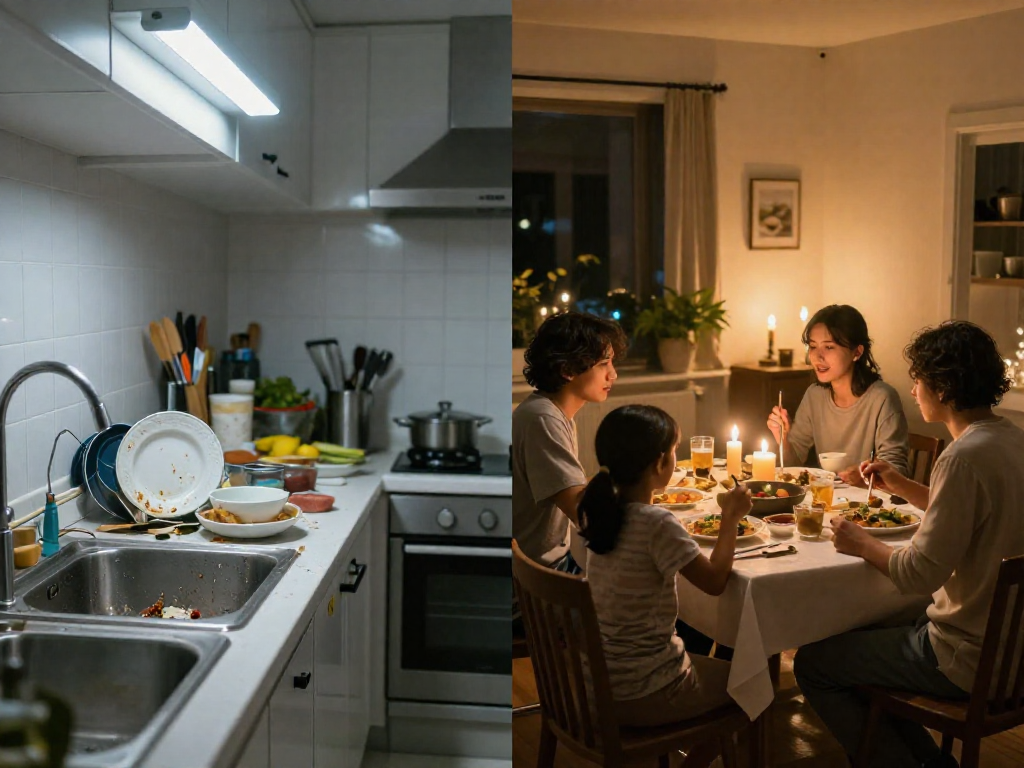
From Chaos to Calm: How Meal Prep Transformed Our Evenings
Discover the emotional and practical impact of consistent meal prep on family life—less stress, more connection, and calm evenings.
Jul 31, 2026 · 5 min read
The No-Cook Weekend: How to Prep Without Turning on the Oven
How can I meal prep in summer or without heating up the kitchen?
Jul 31, 2026 · 7 min read
Meal Prep Containers: A Complete Guide for Dual-Income Families
What are the best containers for family meal prep, considering portions, storage, and reheating?
Jul 31, 2026 · 8 min read