The 'Deconstructed Dinner' Strategy: Batch Prep Components Kids Can Customize
How do I batch cook meals where each family member can choose their toppings or sides?
On this page
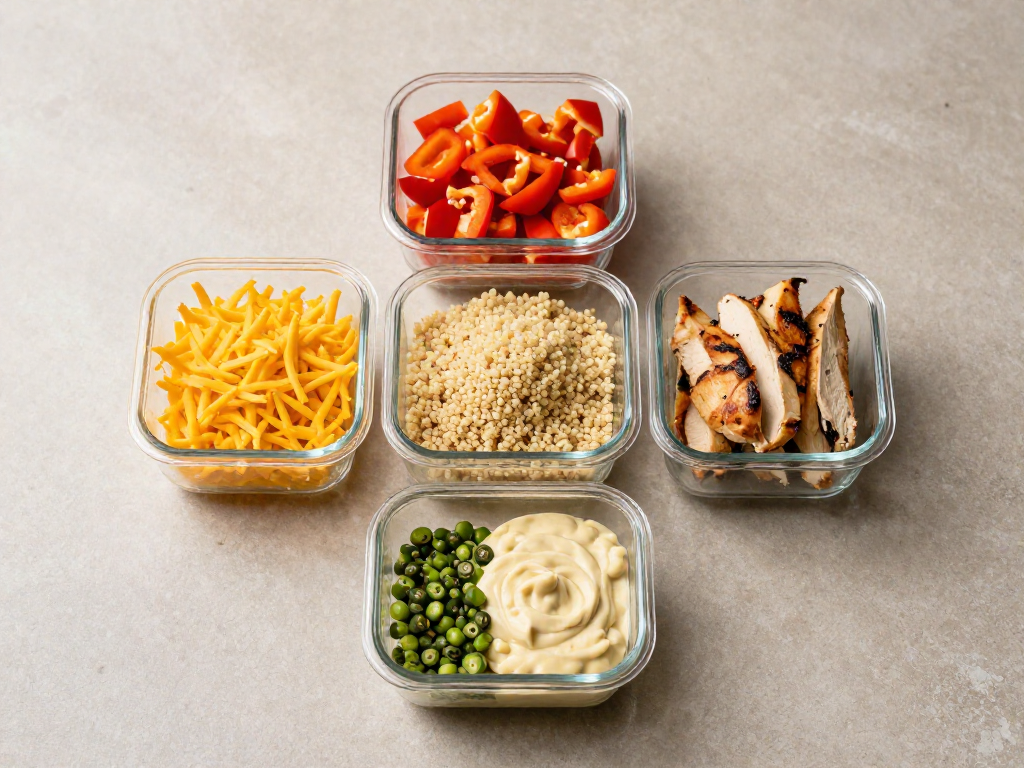
Picture this: you open the fridge, pull out containers of perfectly prepped components, and in 10 minutes, your family assembles their dream dinners—no short-order cooking required. The deconstructed dinner strategy makes it possible, turning mealtime battles into a customizable, stress-free experience.
What Makes a Deconstructed Dinner a Game-Changer
The simplest answer to batch-cooked meals that everyone actually wants to eat? Stop plating finished dishes and start prepping a collection of ready-to-go building blocks. That's the deconstructed dinner — a handful of modular components (a protein, a grain, a couple of vegetables, a sauce or two) that each person assembles at the table exactly how they like. One night it's a taco bowl, the next it's a grain salad, and you never cooked a separate meal for anyone.
This isn't just another name for a salad bar. It's a deliberate system that marries the efficiency of batch cooking with the psychology of choice. And that's where the magic lives, especially if you've got a kid who treats a mixed stir-fry like a personal insult. When children feel ownership over what's on their plate, the dinner table power struggles quiet down. Research on family meals consistently shows that offering autonomy — even something as simple as choosing between roasted carrots and steamed broccoli — increases the likelihood that a child will actually eat the vegetables in front of them. They're not being forced; they're the chef. That shift in mindset, backed by a solid body of feeding science, makes deconstructed meals one of the most reliable paths to expanding a picky eater's comfort zone without a single negotiation.
What makes this approach a genuine game-changer for busy dual-income families is how perfectly it slots into a weekend batch cook. When you prep, you aren't making four different complete meals. You're making one big batch of seasoned chicken thighs, a pot of quinoa, a tray of roasted sweet potatoes, a quick blender sauce, and maybe some shredded cabbage. That's it. Come Monday, the chicken gets sliced over a bowl with sweet potatoes and a drizzle of tahini. Tuesday, the same chicken lands in tortillas with cabbage and salsa. Wednesday, the quinoa becomes a cold salad with whatever vegetables are left. The components get remixed, not reheated as a sad identical plate every night. You get the deep time savings of cooking once while sidestepping the dreary monotony that makes batch cooking feel like a punishment.
This strategy also does something quietly radical for your grocery bill: it slashes food waste. Because everything is a separate element, leftovers aren't that half-eaten casserole nobody wants to finish. They're ingredients — ready for the next remix. That lonely roasted pepper gets folded into scrambled eggs; the extra cilantro-lime dressing brightens a completely different lunch salad. You shop with a template, not a rigid recipe list, so you can swap in whatever protein or vegetable is on sale or peaking in season. The result is a weekly rhythm that feels flexible, not fragile.
The trick is treating components as interchangeable units, not supporting cast. Pick one from each category — protein, base (grain, noodle, wrap), cooked vegetable, raw crunch, sauce — and you have a meal with instant variety. A five-year-old might build a deconstructed taco with just cheese and rice; an adult can load up on everything. Neither requires you to cook a second dish. Over time, the system becomes invisible. You'll keep a running basket of washed greens, a jar of marinated onions, a batch of hard-boiled eggs, and a grain in the fridge, and dinner assembles itself in under five minutes while you unpack backpacks or wipe down the counter for the tenth time. The upfront work pays you back every weeknight with a calm, customizable meal that meets everyone where they are — and quietly nudges them toward a little more adventure on their own terms.
Your Master Ingredient Matrix: Endless Meals from 5 Building Blocks
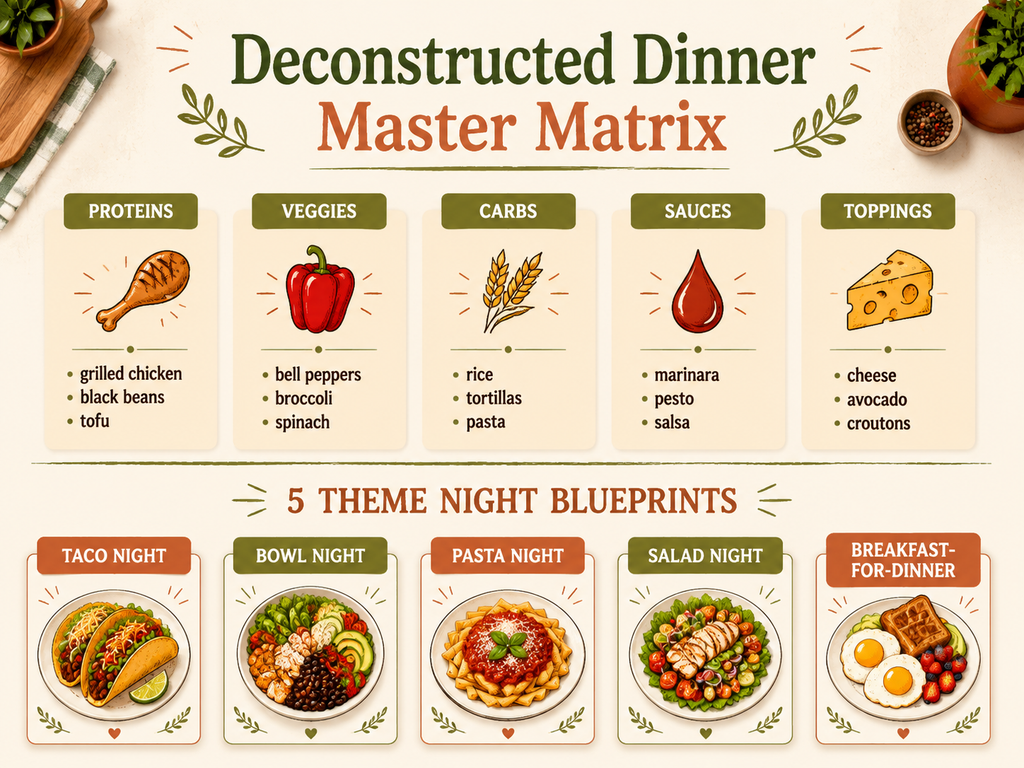
The secret to a fridge full of possibilities is a simple grid: five categories of prepped components that, mixed and matched, spin into entirely different meals every night. No more “chicken again?” groans. Every eater assembles exactly what they want, and you only batch-cooked one set of building blocks.
The five slots are:
- Hearty bases — the canvas: cooked grains, tortillas, toasted bread, leafy greens, or even baked potatoes.
- Versatile proteins — center-of-plate or scattered: shredded chicken, crumbled tempeh, hard-boiled eggs, chickpeas, or sliced steak.
- Colorful veggies — raw, roasted, or quick-pickled: shredded carrots, sautéed peppers, steamed broccoli, cucumber ribbons.
- Crunchy toppings — the finishing spark: toasted nuts, crispy onions, crushed tortilla chips, sesame seeds, or a handful of fresh herbs.
- Flavor-boosting sauces — the personality switch: a garlicky yogurt sauce, peanut dressing, salsa verde, or a simple vinaigrette.
That’s it. Once each category is stocked, the meals build themselves.
How to Mix Across Cuisines
The same five blocks can pivot from Mexican to Mediterranean to Asian without cooking anything new. Start with a neutral base like quinoa. For a burrito bowl, pair it with black beans, fajita-style peppers, corn salsa, and a chipotle crema. Tomorrow, that same quinoa works under Greek meatballs, diced cucumber, tomato, feta, and tzatziki. The magic is in the sauce swap and a few key toppings — you’re not reinventing the wheel, just remixing the playlist.
Here’s a quick cheat sheet to get you started (and yes, this is exactly the kind of thing worth printing and taping inside a cabinet door):
- Mexican night: corn or flour tortillas / black beans or shredded adobo chicken / sautéed peppers and onions / pickled jalapeños, cilantro / salsa verde, lime crema
- Mediterranean night: pita or couscous / falafel or sliced lamb / cucumber, tomato, red onion / crumbled feta, olives / tzatziki, lemony tahini
- Asian-inspired night: rice or soba noodles / teriyaki tofu or sesame beef / shredded cabbage, edamame, scallions / toasted peanuts, fresh basil / peanut sauce, sweet chili vinaigrette
- Comfort food night: baked potato or mac & cheese / crispy bacon or rotisserie chicken / steamed broccoli or roasted mushrooms / crispy onions, chives / ranch or brown butter drizzle
The Pro Move: Keep a Few Neutral All-Stars
Some ingredients quietly plug into any cuisine. Plain shredded chicken, steamed brown rice, roasted sweet potato cubes, and a simple lemon-tahini dressing do zero harm to taco night and feel right at home in a grain bowl with feta. When you’re short on brainpower, these cross-theme staples keep dinner flexible without feeling like a random fridge raid.
Batch your matrix once, then let every family member play chef. You’ll be shocked how many meals emerge before you have to restock.
The Step-by-Step Batch Prep Blueprint for Deconstructed Dinners
Set aside a two-hour block—Sunday afternoon works for many families—and you can assemble a week's worth of build-your-own meals, all from a handful of components. The secret is parallel cooking: hands-off grains and proteins go first, then you roast vegetables and blitz a sauce while they finish. Start a pot of brown rice or quinoa on the stove, and at the same time get chicken thighs or a block of tofu into the oven or an Instant Pot. Those take care of themselves while you chop broccoli, sweet potatoes, and bell peppers for sheet pans. Slide the vegetables into the oven alongside the protein for the last 20 minutes, and you're down to the final, quickest task: whirring a batch of peanut sauce, herby green dressing, or simple vinaigrette in a blender.
To shave off even more time, lean on frozen vegetables. Pre-chopped frozen broccoli or cauliflower florets roast up crisp with no extra knife work. Pre-cooked proteins like rotisserie chicken, canned chickpeas, or frozen meatballs cut cooking down to a quick reheat. An electric pressure cooker turns dried beans into tender building blocks in under an hour without soaking, and a rice cooker with a timer means your grain is ready the moment you walk back into the kitchen.
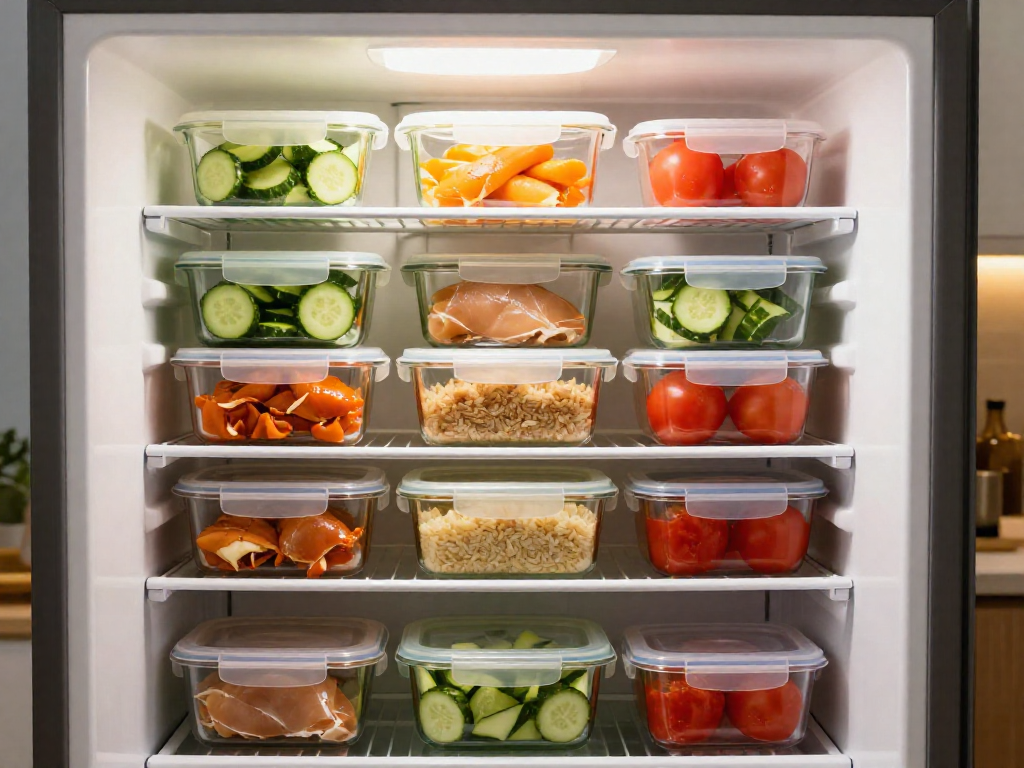
Storage makes or breaks the week. Glass containers with airtight lids keep roasted vegetables from turning soggy, and clear containers let everyone see at a glance what's available. Layer grains and proteins in one set of containers, roasted veggies and raw crunchy toppings (shredded carrots, snap peas, diced cucumber) in another. The non-negotiable rule: sauce stays on the side, always. Portion dressings and dips into small jars so each person adds them right before eating—nothing wilts faster than dressed produce. If you're tight on fridge space, stack rectangular containers and use a lazy Susan for sauces.
By the end of that two-hour session, you'll have containers of cooked grains, a protein or two, two or three roasted vegetables, a batch of crunchy raw toppings, and at least one sauce. Each evening, set them out family-style. One child builds a grain bowl with chicken, roasted sweet potatoes, and peanut sauce; another makes tacos with black beans, peppers, and salsa. The work is done; the week is flexible.
Kid-Approved Assembly: How to Get Little Hands Involved
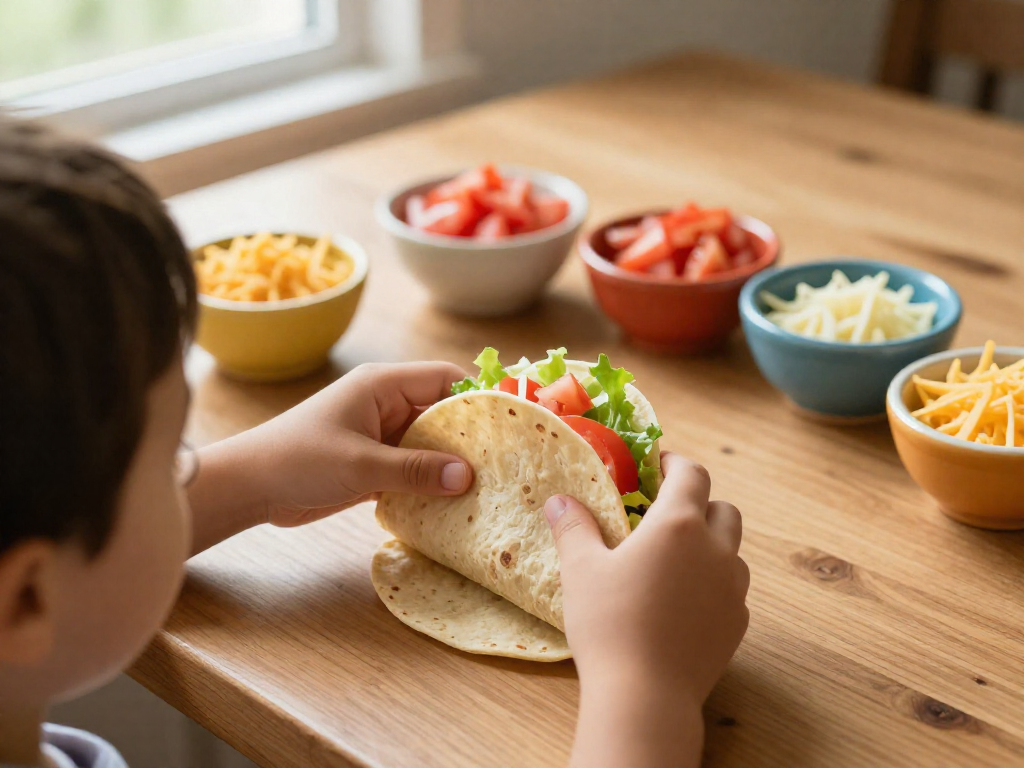
The secret to a smooth deconstructed dinner is putting kids in charge without them realizing it. Start by setting up a low, accessible assembly station. A sturdy step stool at the counter or a kids’ table lined with small, labeled containers turns dinner into an interactive station. Clear bins or ramekins for shredded cheese, diced veggies, and proteins let even pre-readers grab what they need by sight.
Assign jobs that match their abilities. Toddlers can sprinkle cheese or tear soft herbs, and they love the responsibility. Three- and four-year-olds can spoon out portions using a small scoop. By five or six, kids can plate their entire meal, choosing their own protein, grain, and toppings. The key is tools scaled to their hands: a mini ladle, a tiny spatula, a crinkle cutter for soft foods. Keep a damp cloth nearby and don’t stress the mess—it’s part of the process.
Adapt the classic “one-bite rule” into a low-pressure game. Instead of insisting they eat a spoonful of something new, challenge them to put a single pea on their plate, or give a funny name to a new topping. “Dragon scales” for sliced almonds makes a topping an adventure. Celebrate the attempt, not the consumption. Over time, familiarity builds without battles.
If your child gravitates toward a single item and ignores the rest, don’t fight it. Let them build their taco with just cheese and tortilla, but place one or two “bridge” toppings right next to their favorite—a sprinkle of finely diced pepper, one black bean. Don’t mention it; just let it live there. After a few meals, they might mix it in on their own. The goal is exposure, not compliance. With deconstructed dinners, you’re not cooking separate meals; you’re offering the same ingredients in a way that meets them where they are.
5 Ready-to-Go Deconstructed Dinner Theme Nights
These five themes are built from the master ingredient matrix you've already stocked, so they slide right into your Sunday batch prep. Each one gives everyone at the table a plate that looks exactly the way they want it — no short-order cooking.
- Taco Bar: Seasoned ground meat or shredded chicken, black beans, warm tortillas, pico de gallo, shredded cheese, and a quick guac. Prep the protein and chop toppings on Sunday; dinner is a 10-minute reheat.
- DIY Stir-Fry Bowls: A pot of jasmine rice, a rainbow of sliced bell peppers and snap peas, and teriyaki chicken thighs that marinated while you prepped. Let each person build their bowl and sprinkle with sesame seeds.
- Loaded Baked Potato Night: Bake a tray of russets ahead of time. Set out chili (meat or bean), steamed broccoli, sharp cheddar, and sour cream. Kids love “making a volcano.”
- Pasta Bar: Cook penne or spaghetti in bulk. Offer marinara, pesto, mini meatballs, and a big bowl of grated Parmesan. Even the picky eater will find a combination they’ll eat.
- Mediterranean Platter: Warm pita, falafel (baked from frozen works great), hummus, a quick cucumber-tomato salad, and tzatziki. It’s colorful, filling, and feels like a treat.
Pick two themes each week, and you’ll never hear “I don’t like that” again.
Common Deconstructed Dinner Mistakes to Avoid
Deconstructed dinners implode when you offer too many choices. Kids freeze up staring at a dozen toppings, and half the extras wilt in the fridge. Stick to three or four options per category—enough for variety, not so many that decision fatigue sets in.
The other silent killer? Under-seasoning. Each component should taste good straight from the container because you won’t have time to doctor it at the table. Salt proteins, dress grains, and add a pinch of acid to veggies during prep. And always label everything with the date it was made—‘smell test’ is not a system. Finally, know your pantry: if a favorite topping like sour cream or tortilla chips disappears midweek, have a quick sub ready (plain yogurt, toasted oats) so dinner doesn’t stall.
See also
- /batch-cooking-for-beginners
- /weekly-meal-prep-template
- /how-to-involve-kids-in-cooking
- /picky-eater-solutions
- /freezer-friendly-meal-components
Related articles
Stealth Health: Hidden Veggie Batch Recipes That Kids Don't Notice
How can I sneak vegetables into batch-cooked meals without detection?
Jul 31, 2026 · 5 min read
Kid-Approved Freezer Stash: 15 Meals That Freeze Perfectly
Discover 15 kid-approved freezer meals that freeze perfectly, with tips to avoid mushiness and boost flavor. Perfect for busy parents.
Jul 31, 2026 · 11 min read
When Kids Reject Your Batch: Troubleshooting Meal Refusal
What do I do when my child won't eat the meal I prepped?
Jul 31, 2026 · 7 min read